I love the s4 score because it is beautiful and basically confirms M-Theory in the best possible way.
I’m talking about that one scene where John flirts with “E” on the bus in TST. Now, the melody that is playing (TST score; chapter “59 Missed Calls”; 0:46) is interesting because you get a version of MORIARTY’S THEME out of this.
Moriarty‘s theme: d# f# f g# .
The (let’s call it) “E”-theme: a# g f g# .
If you transpose it becomes: g# f d# f# .
Let’s put these notes together: d# f# f g# (g#) f d# f# .
As you can see, it looks like the melody is being “continued” by the “E”-theme.
So, the melodies aren’t the same but they share the same “content”.
That shows us A LOT. Let’s get from the score to the actual scene..
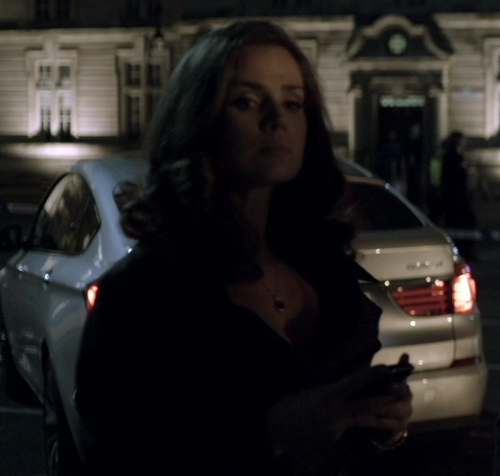
“E“ is a Mary mirror (I wrote a meta about that here), even though “E” is later to be revealed as Eurus, a Moriarty mirror.
(It you have no idea why I think that, here is a picture that might help:)
“E” has got the Moriarty theme but not, since it is a different version.
So, “E” is not exactly Moriarty but still has the same “content”, the same intentions as our mad villain.
i can’t add anything but encouragement and admiration, because i only even hear the most blatant themes (like john’s distinct four note theme and the main title), i never would have identified what i just think of as “creepy music notes” here and there as moriarty’s actual theme. But @holmesianscholar has done some really great close listening music metas.
Posts on my dash today about Moffat & Gatiss’s intentions vs. posts depicting scenes from the show with the actors in Sherlock, and the way they’ve played their parts made me think, at first – maybe there is something out of phase in how the writers think about these characters vs. how the actors do… but then I thought, no… that’s not likely.
As much as a it is difficult to place authorial intention at any one locus in a thing like a TV show, if they have always intended that this is a story about the best friends that ever lived, and that the story they’ve told is about how they got to be the men of legend that they are, then I think everyone involved must have known that. So, why is it that the whole story is so outrageously, undeniably romantic, and why is it that I am absolutely positive that Sherlock is in love with John, and that John, though he can’t perhaps embrace it, loves Sherlock, too, and that both of them loved Mary?
Then I thought: maybe the actors really were endeavoring to act friendship. Deep, self-sacrificing friendship, once in a lifetime friendship, and the way they show it on screen simply LOOKS like love. Maybe its that in the imaginations of those actors as expressed by their actorly instruments, those two relationships – deep, true friendship and love – simply express themselves similarly?
Maybe it’s not that there is anything out of phase, it’s just that friendship like theirs LOOKS a lot like love. Maybe the real revelation is how little air there is between the two? How little real distinction.
Just an idea.
Let me see if I can do this. I’ve been up and at it for three hours and I may be out of good words.
Maybe it looks like Sherlock and John love each other because they do. Love and friendship are two words that we expect to cover a lot of ground. Which is why you used so many lovely words to describe the relationship you are seeing on the screen. What if they love each other deeply, steadfastly, selflessly without whatever element is necessary to tip that into the realm of romance?
What would that element be? Sex? Physical affection? Poetry and flowers? An all-consuming desire for one or all of those things? Is it like porn? We just know it when we see it? Or not. If we are being shown all of the elements of a great romance without the actual romance, what does it mean that we are filling that missing element in?
Maybe it’s a gendered thing. I see women speak of their friends in terms that seem very romantic all the time. Maybe we aren’t used to seeing two men behave in the same way.
Maybe we’ve lost the language for romantic relationships that aren’t sexual.
Reblogged because I love these thoughts and want to think more about all of them.
Yeah, I love love love this discussion, and I’ve also been thinking about how to articulate my response. The older I get, the less obvious to me is the distinction between friendship and romantic/sexual love, and the privileging of one over the other (YES, HELLO, TOPIC OF NEXT NOVEL!). And the less interesting/productive/healthy/compelling is the defining and policing of that line. (What even IS that line? Is it, as I suspect, intimately tied to patriarchal imperatives to control women’s sexual behaviour? To own us?) What would our relationships look like if we hadn’t all internalized this, I wonder? What would my life look like?
Maybe that’s one of the reasons I love Holmes in the first place – that line is so blurry, and neither Sherlock Holmes nor John Watson really seems to have a problem with that lack of definition (at least, in my headcanon). And yes, I find this more novel in depictions of masculine relationships, so maybe that’s part of why it’s so compelling.
I agree so much. I don’t see the line so clearly as I once did, and I also I see no point in ANY of the policing. Things are what they are and no amount of policing can change them. Why do we always need things to be so rigidly defined and why are we so attached to reifying the codes that define them?
Also, this is the thing that, I think, makes me not have any problem with the ambiguous, in-processness of the relationship depicted on Sherlock. I love the blurry line and the lack of finished-ness and the uncertainty. I love the vulnerability of where they are with one another. I like that it’s hard to tell where their lines are. I’m not sure I’ve seen male friendship depicted in that way, and I love the sense that it could be both and it could be either. I like that they have refused to define it. It feels like something I recognise. Something a bit real.
I think you’re right, too, about the way we treat sexual relationships vs. friendships and about the policing of that line. I think it is a way of exercising control over what is happening between people. I feel like the whole project is so misdirected, because friendship, love and desire emerge out of our interactions without our control, and it’s pointless to deny their existence when they do. It just makes people unhappy to police themselves and others.
Yes to so many things in this thread!
Relationships can be far messier and more complex than the stories we tend to culturally tell about how relationships work.
The people I say “i love you” to the most are friends I’m not sleeping with.
I have a best friend I love fiercely, and have at points pined after in a romantic sense, and now would gladly live with platonically for the rest of our lives, if circumstances allowed.
I have had friends I flirt with, friends I sleep with, friends I drift in and out of dating, friends I regularly travel with one on one, friends I snuggle with, friends I would do anything for.
I am very comfortable with unconventional and ambiguous relationships. I wish our society was a lot more so – especially for men, who in my culture are socialized not to talk about feelings much and not to get too emotionally close to anyone other than one romantic/sexual partner. I think as a result, we aren’t great at interpreting guys being super close without no homo-ing, which is a shame and contributes to the while cycle. And in general, we don’t tell enough stories about all the complicated ways people can be devoted to one another.
I was really struck by something Moffat said about a line in the sand they weren’t willing to cross – they never want to either confirm or deny whether Sherlock is really a virgin or not! (I’m paraphrasing but that was the gist of it)
I think they also wanted to do the same thing with his sexual orientation, and they mostly succeeded. I think that ambiguity in itself is important to them. It’s not the absence of data, it’s the presence of deliberate, cultivated uncertainty.
And I really respect that, because of the freedom it allows for fans in their interpretations. Is Sherlock gay, bi, ace? Sure, why not? (Even straight. That’s harder for me to wrap my brain around, I admit – I can totally read/write him having romantic/sexual relationships with women, no problem, but for me he always does it in a really bisexual way. That’s just my bias talking though, no one else is obliged to live by it.)
Ambiguity in relationships in a creative work leaves so much room to grow and change, for the characters, and for fans to see themselves reflected and to develop in our ‘what-if’ storytelling culture. And it reflects reality, very much so, particularly with this iconic relationship that’s had so many different iterations over so many years.
I really relate to that, ambiguous passionate friendships. I too have had so many of those, and many of them have lasted much longer and had more formative influence on my life than explicitly romantic relationships.
Every word of this (both OP and comments) spells out what I’ve grappled with, but been unable to put so eloquently into words (and admittedly I haven’t tried that hard for fear of not being able to really communicate what I was thinking/feeling and pissing people off). I love the ambiguity in Sherlock. I love the deliberately unanswered questions. I love seeing a portrayal of friendship and love that isn’t hindered by societal expectations of what it means to be a male (or female, for that matter). That’s part of what grabbed me about the show to begin with and why it’s still compelling to me years later.
This is a lovely, nuanced thread; my thanks to all participants.
For me it’s about emotional exclusivity. Life-mates might be a good way to phrase it: John is the center of Sherlock’s present and future, and Sherlock John’s; they go to bed in the same flat and wake up to toast and coffee shared across the same table and work on crimes together and make decisions for how they want to live their shared life ten and fifty years down the road. That doesn’t actually have to involve sex; though the way I read the showthere was symbolism and subtext that would easily be parsed as romantic in an opposite-gender couple. It doesn’t even have to *preclude* sex with other people; John’s string of girlfriends documented in ASIB didn’t make everything Irene said at Battersea somehow false. Actually, as an asexual but not necessarily an aromantic, I’m personally most moved by fics that get at the whole gamut of nonsexual relationships.
What bothers me about later series is this standard was applied a bit unevenly. At least as I experienced it. A good example of this is the Janine scene in HLV, where John seems dismayed and even confused that Holmes would have a girlfriend. John has gone and gotten married, but there’s a sense somehow that Sherlock isn’t allowed to have that in his life, he has to be monogamous to John even as John isn’t monogamous to Sherlock. As I said, neither should have to be; but the sense that one’s allowed those other sexualized relationships and the other isn’t just never sat well with me. And similarly, I don’t think we ever fully wrestled with how Mary fit into all of this. I’m not sure she *should*, at least not without reconfiguring their relationship into the emotional equivalent of polyamory. (Which I’m not opposed to, at all, but for a whole host of reasons it wasn’t the story I thought Mofftiss were trying to tell for John and Mary in particular.)
None of which means John and Sherlock have to boink, or that John/Sherlock has to be about getting to the boinking. I quite like nonsexualized John/Sherlock, in all its varied glories. I’m just not sure the show as it exists at the end of TFP has really worked through what exactly Johnlock (non-boinking or boinking, or anything in between) would actually mean, for all parties involved.
I really need to talk about how Molly has repeatedly been used to represent the logical part of his brain, the part of him that is calm and in control no matter what the situation is and it makes me so ecstatic that this character who people still want to undermine and pass off as a silly girl with a pathetic crush on the main character is canonically one of the people Sherlock thinks of when he needs to focus. And it’s not only in HLV, where she and Mycroft help him concentrate on surviving, but when she steps out of a crowd of brides and makes sure he knows exactly why they’re doing what they’ve done. He seems surprised to see her because he doesn’t even realise that subconsciously Molly Hooper is the person in his head that represents calm, controlled, methodical work which is made even clearer when he can’t even replace her in a Victorian morgue no matter how unlikely it would be for her to be there realistically. No matter how you view it, whether you ship them or not, you absolutely cannot deny that Molly Hooper is one of the most important people in Sherlock’s life.








 Sherlock Fandom Archive