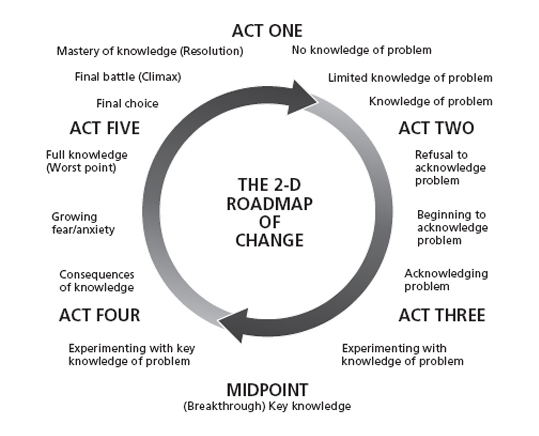
Ok, obviously I’m obsessed with this book and have a lot of ideas about this myself, but I still have a couple future metas with slightly different foci that are much closer to fighting shape than any of my episode-by-episode thoughts on these diagrams, plus this is so so fun, I literally have an enormous spreadsheet and a mind-map dedicated just to this, and just based on that there’s at least two full 3-D arcs and a 2-D arc that I can make out, possibly like ten if you got even more specific, I mean there is SO much material here for us to mine because we stan a beautiful, painstakingly constructed, and infinitely complex masterpiece of a show.
So like, hopefully this will get some of you guys started and isn’t too much of a spoiler, but for example I’m pretty sure the “problem” at the center of the 2-D diagram is none other than the final problem, i.e. “stayin’ alive.”
I believe Holmes was into Classicism, in another form. “Classicism is a force which is often present in post-medieval European and European influenced traditions; however, some periods felt themselves more connected to the classical ideals than others, particularly the Age of Enlightenment, when Neoclassicism was an important movement in the visual arts.” Now, we know Doyle was heavily involved with the Enlightenment. “In general, classicism can be defined as a style in literature, visual art, music, or architecture that draws on the styles of ancient Greece and Rome, especially fifth- and fourth-century b.c.e. Athens and late Republican Augustan Rome.” Arthur Conan Doyle was a serious student of Greece and it’s history, and during the time of Augustus, there was the famous Romantic poet, Ovid, a huge influence on Shakespeare. I know Holmes is familiar with Shakespeare but I wanted quotes, and found these. “When Doyle himself wrote a play featuring Holmes he first approached two leading Shakespearian actors, Beerbohm Tree and Henry Irving (who both turned it down) before allowing American actor William Gillette to adapt the play…So did Conan Doyle have Shakespeare in mind when he wrote the character of Holmes? According to Ted Friedman, “Sherlock Holmes is familiar with the writings of William Shakespeare … Holmes quoted Shakespeare from 14 of his plays in various cases”. The most famous Shakespeare quote spoken by Holmes, though, is the brief sentence “The game is afoot” which comes in The Adventure of the Abbey Grange, and is from Henry V. It hardly indicates that Shakespeare provided a lot of obvious inspiration for Conan Doyle. Robert Fleissner, though, wrote a serious study that finds many connections between Doyle and Shakespeare in 2003 with Shakespearean and Other Literary investigations with the Master Sleuth (and Conan Doyle) Homing in on Holmes.”
Fantastic commentary. Thanks for the addition! Of course, my own favorite Shakespearean quote Holmes uses is from Twelfth Night, on his return to Watson, though ostensibly addressed to Moran: “Journeys end in lovers’ meetings.”
@marsannay quite right! More classics! Pocket editions needn’t be poetry. I prefer the sonnets because that’s more romantic, but Holmes calls himself an “omnivorous” reader, so it could be either.
Also re: the initial discussion of Mycroft and the Diogenes, club culture wasn’t particularly gay, only very middle/upper class—straight, gay or otherwise. And everyone liked naming things after Greek things. The educated Victorians thought of themselves as the second Roman Empire, which wasn’t too far off the mark. Gay culture drew on majority culture’s love of the classics, not vice versa. The Diogenes COULD have been a gay club—they did exist—but it isn’t obviously one.
@ghislainem70 re: TEH, I never stopped to wonder where he got those books. Do you think they were his or might he have bought them off a corner bookstand on the way to the murder scene? I can imagine he’d enjoy Catullus, but “British Birds” and “The Holy War” sound rather unlike him, “omnivorous” taste in books notwithstanding.
@a-candle-for-sherlock I think it’s a question of why ACD chose those titles. Adding the random “British Birds” and “The Holy War” makes it seem the titles could be random, not something he carried on the hiatus. And yet, Catullus is, and was in ACD’s day, infamous as an explicitly gay, even pornographic text, amongst well-educated Victorian men such as ACD, and Holmes. So it’s a case, in my view, of ACD either deliberately or unconsciously throwing camouflage over an otherwise clearly stated suggestion by Holmes to Watson in TEH that Watson has an empty space (on his bookshelf) that needs filling— with gay pornographic Latin verses.
Or not.:)
OH. Well, that’s notably more interesting than I’d expected.
@a-candle-for-sherlock I’m assuming when discussing ACD’s choice to mention Catullus we’ve all read the pornographic Catullus 16. But there is also the beautiful Catullus 65, “Shall I never see you again, brother dearer to me than life?” Which seems something that Holmes might well have dwelt upon during the Hiatus.
IMO, the queercoding is not in any particular style that Holmes (or Watson) might have preferred, but in a combination of the titles, themes, authors, etc. Rather than use an “atmosphere”, he makes various singular references. The Catullus is so clear an example of this that even Samuel Rosenberg noticed it.
In BBC Sherlock, instead of greeting John with a work by Catullus, Sherlock quotes gay writer Edmund White’s autobiographical novel The Beautiful Room is Empty:
That’s very true, though I wouldn’t say Holmes shows no interest in the classics at all—he does compare Horace and Hafiz, with noticeable appreciation. I’m of the school that believes Doyle wrote Holmes as gay just by recording the traits of men he’d known and loved who were queer (or who he wished were uninterested in any intimacy but his friendship) rather than deliberately queercoding him, and we’re left to fill in the blanks of what he could be. I read Holmes as intersex and gay and mycroft as asexual, but the reading could easily be reversed.
“But for me, the tuxedos (which depersonalize waiters and lend distinction to friends), the banquet, and the toasts all permitted me for two minutes at a stretch to imagine we were a club of lovers…” [x]
… which is slightly more reasonable in 2014 than an armful of Catullus.
*unprintable language aimed at The Empty Hearse’s ability to break my heart again*
Welcome to the second installment of the TJLC Month in Review! For outside reasons, this edition covers both March and April of 2018. Questions, comments, and additions are welcome! Please check the About page (below) first.
“Data, data, data! I can’t make bricks without clay!” the iconic literary sleuth Sherlock Holmes once declared. Over a hundred years after his debut, Adam Frost and Jim Kynvin went back through Conan-Doyle’s stories to in search of data to explain Sherlock’s enduring appeal. Above are some of the fun tidbits they uncovered.
I made a spreadsheet of every Canon story with every Granada adaptation episode for quick reference. The Canon stories are organized via publication date according to Wikipedia, not in-universe chronology. (both are color coded by collection/season)



 Sherlock Fandom Archive