There’s so much s4/s5 foreshadowing in TEH, it’s ridiculous. “so the whole thing was a fake” “why would someone go to all that trouble…why indeed” “do you honestly believe that if you have enough stupid theories it’s gonna change what really happened?” ***what really happened, changes***
bonus: **i would have told you i was coming back but i was worried you might let the cat out of the bag**
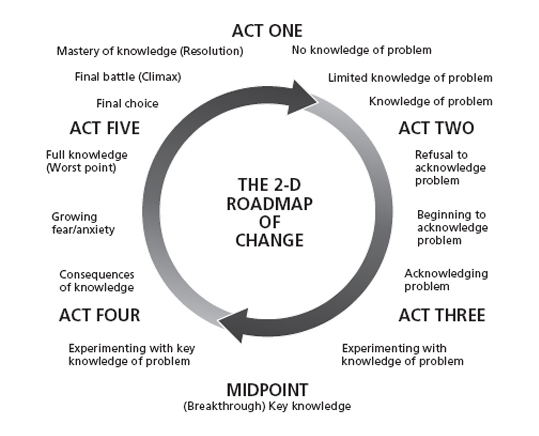
Ok, obviously I’m obsessed with this book and have a lot of ideas about this myself, but I still have a couple future metas with slightly different foci that are much closer to fighting shape than any of my episode-by-episode thoughts on these diagrams, plus this is so so fun, I literally have an enormous spreadsheet and a mind-map dedicated just to this, and just based on that there’s at least two full 3-D arcs and a 2-D arc that I can make out, possibly like ten if you got even more specific, I mean there is SO much material here for us to mine because we stan a beautiful, painstakingly constructed, and infinitely complex masterpiece of a show.
So like, hopefully this will get some of you guys started and isn’t too much of a spoiler, but for example I’m pretty sure the “problem” at the center of the 2-D diagram is none other than the final problem, i.e. “stayin’ alive.”
So I honestly can’t believe I’ve never seen anyone talking about the art direction of this scene. If I’m repeating something, Ah,well. But I’ve honestly never seen it pointed out that this is the very first time we see Mary, and there are three important things here:
Mary reaches for John’s hand. John takes it, of course—he is used to being offered comfort for his loss, by now—but he is not reaching out to her for comfort in his sadness. She is inserting herself into his grief. Reflexively, he lets her.
We only see the back of her. It’s unusual to introduce a major protagonist any other way than by showing their face pretty much immediately. A major antagonist, however…a baddie…well, they often are introduced in a cloud of cigarette smoke, from a distance, in the shadows, as a mysterious voice on a phone, or in some other way that doesn’t tell us right away who they are. Our first glimpse of Mary gives us only the most vague information about her. Obviously a woman, obviously someone John is close to, as he holds her hand. Other than that…who is she? We don’t know.
Finally, it’s no mistake she is wearing a long, grey coat which flares slightly from the waist, and a blue scarf. But they are paler shades of those colours than Sherlock’s coat and scarf were, because Mary is but a pale imitation of the person we are used to seeing standing beside John Watson (even once, when they were handcuffed together, holding John Watson’s hand in a manner similar to what we see here). Her coat and scarf look cheap, “less than,” and her denim jeans are “less” than Sherlock Holmes’s designer trousers. Her dark hat is a visual echo of Sherlock’s dark hair. This whole shot is set up not only to remind us that Sherlock used to stand here at John Watson’s side, but also that This is some lesser, fake, replacement-Sherlock standing at John Watson’s side, and whether consciously or unconsciously, John has chosen a pale imitation indeed.
I was thinking about this post a couple months ago, which I wrote in 2014. I know there is a segment of fandom who accept Mary’s redemption arc, and that’s fine. For myself, though, I do still maintain that Mary was initially designed to be a villain, and was handled that way all through S3 and into The Abominable Bride’s present-day segments. I like her as a villain because she is interesting as a villain. A woman with agency who just fucks shit up for giggles, with power-over, even if ultimately defeated (as one assumes she would be) would have been fun to watch; that idea appeals to me much more than the “motherhood and the love of a good man turns a bad woman into a saint” trope we got in S4. Unfortunately at least one of the Sherlock writers has a long history of writing flimsy female characters, so perhaps it’s no surprise he fell back on old habits rather than do the interesting thing.
(Of note: I think there’s an argument to be made that not only was Mary meant to be a villain–she was meant to be Moriarty. The pink phone, woman’s handwriting, and “voice so soft” in The Great Game…all good clues Moriarty was a woman. Maybe Richard Brook really was an actor. Up until The Six Thatchers, I felt sure this was where it was going.)
I’m not trying to persuade anyone away from embracing Mary’s now-canonical redemption arc, I’m just pointing out that it’s not crazy of me (or anyone else) to have felt like it was a rug-pull. There was a lot of evidence from moment one with Mary that she was not designed to be a good guy, but that over the course of time, the early plan for her changed.
I guess one thing I will push a little on is something I hear from peeps who like Mary a lot: that those of us who think of her/write her in fic as villainous are always only doing so because she “got in the way of Johnlock,” so we demonise or fic-murder her out of spite. I, for one, never expected Johnlock to become canon, so I ain’t mad at Mary and never was. I’m mad at the writers for writing the beginning of one story only to write the end of an entirely different one.
The main problem I have with Mary’s “redemption arc” is that she didn’t GET a redemption arc. The exact thing that I was worried would happen post-s3 is exactly what happened: rather than letting her be a really interesting villain OR giving her an interesting, believable arc where she actually did things to earn redemption, moftiss gave us Sherlock’s assertion that John (and thus we) should forgive her, based on very flimsy reasoning… And then just assumed we’d done as instructed and proceeded into s4 as though the audience had clearly already forgiven her. Then made her fuck up AGAIN (but not in an interesting villain way even) and failed to adequately redeem her AGAIN other than by killing her and making her into a wise ghost.
I don’t blame anyone for expecting her of be a villain, because it would have made worlds more sense than what we got. The only reason I didn’t expect it was because I’d already lost most of my trust in them with TEH.
This. Both of these.
I will not pretend I wasn’t hoping for Johnlock. I was. But I thought Mary was a fascinating read on Moran. She had the skills. She was even in the damn Empty House. And it felt like a shift. Maybe because Elementary made love interest Irene a baddie so they no longer thought it was clever and different enough? Anyways. I agree wholeheartedly with the above assessment.
Agreed. It’s not “misogynistic” to think Mary was a villain. It’s not “just cause she’s a woman,” or “just cause she’s in the way of two dudes fucking,” as certain extremely homophobic members of this fandom like to claim.
It’s because it’s the only interpretation of her character that made sense. Sure, if she had never done anything antagonistic and there were no parallels between her and Moran, then calling her a villain would be questionable.
But she WAS antagonistic. Plain and simple. That’s all there is to it. Redemption arc? Exactly what did she do to deserve forgiveness or earn redemption before her final moments? There was no “redemption.”
Why introduce her the way they did, make us question her morals and history and identity, have John forgive her for flimsy, questionable reasons, make us question her AGAIN, and then kill her? What was the point of her character arc, besides to serve as a prop to John and Sherlock’s story. She served her purpose, and then they killed her. She could have been so much more than a plot device if they had just let her shine as the antagonist they wrote her as. She could have been the most interesting adaptation of Mary Morstan ever written. Instead, as stated above, she was just a “bad woman turned into a saint by a good man.” Blegh. Boring.
Some times experiments don’t work out. Sometime big projects include mistakes and it takes a lot of compromises to satisfy the real goal. So was the case with The Six Thatchers.
To a room of ~100 people, Rachel Talalay explained something of the complicated backstory to the first episode of Series 4 and shared with us a little of the amazing footage that had to be left on the cutting room floor.
In Mark Gatiss’s initial script, the story was going to be told with a complicated chronology. The story was supposed to start somewhere in the middle, with flashbacks inserted into scenes. This show has played with chronology before, but this plan was more ambitions and experimental than previous episodes. In the spirit of Sherlock’s cinematographic ingenuity, Talalay decided to demarcate these flashbacks with fantastic transitions in and out of the scenes into which they were inlayed.
The filming proceeded with this non-chronological order of scenes, but when the material was assembled in a temp edit, it became apparent that the narrative didn’t really work. Talalay had her doubts about how it came together, and Moffat and Gatiss made the call to change the sequence to the straight forward chronology we saw broadcast. Talalay took pains to explain that the switch was necessary for the sake of the story and that no one was at fault for how the experiment failed. They took a risk together and these things don’t always pan out.
The choice to reorder was the right one, but it was also a very difficult compromise for two reasons. First it changed the purpose of many scenes, and with no time to reshoot they had to work out new criteria to determine the best takes to make a cohesive narrative from what they had. Second, it meant abandoning these amazing transitions that were in and of themselves creative and technical acheivements that each took days to prepare and shoot.
It was these transitions that Talalay shared with us at Sherlocked USA 2018. They will never be released, so here are my descriptions of the transitions she shared. Some of them involve scenes that weren’t part of the final edit at all. I’ve done the best I can to describe what I can remember from seeing these only twice.
1. In and Out of Cars This seems to be on the way to the first case with Greg, on the way to the WELSBOROUGH HOUSE. John, Sherlock, and Greg are in a taxi in the middle of the day. Greg says “So how long has it been then” and John replies “Three months.” Sherlock rises from his right-forward facing seat and steps out of the passenger door into day light. The camera approaches his back until we only see the coat. Camera recedes and it is night. Sherlock steps back into the right passenger seat while typing in his mobile and Mary is wheezing in labour. The camera pivots to also catch John at the steering wheel, as seen in the show. There is another transition back to the original taxi shot and John repeats “About three months.”
2. Walking through Doorways: As Greg, Sherlock, and John approach the door to the Welsborough House, Greg says “…We thought we’d never see you again.” Sherlock replies “You weren’t the only ones.” As Sherlock steps through the doorway, he pass into the room where he and Mycroft are interrogated by Sir Edwin and Lady Smallwood. He sits down and takes off his coat. The scene that followed was the one used to open The Six Thatchers.
At then end of this scene, Sherlock says “Because I love it.” and walks out the door and back into the WELSBOROUGH HOUSE.
3. To and From the Christening: John is looking at bus shelter and a bus goes by and reveals that he is wearing church clothes at the Christening for Rosie. John says to Sherlock something along the lines of “You could come visit Rosie” and Sherlock replies “The conversation would be a bit onesided.”
Another shot of Sherlock approaching the camera down the aisle, framed by the arches of the church. I’m not sure if this transitioned to another scene.
4. Through the Mirror: In the sceen where Mary finds Sherlock in the Moroccan hotel, the shot begins with her standing by the table looking accusing and Sherlock sitting on the floor crossed-legged. Sherlock gets up and walks towards a mirror by a curtain in the back of the room. In the curtain we see a reflection of Mycroft’s underground office. Sherlock walks past the mirror into the scene where Mycroft begins by reciting the wikipedia article for “Agra”
When that scene ends, Sherlock rises from his seat and walks back to the mirror to pass back into the Moroccan hotel room and sits down on the floor again to pick up the conversation with Mary.
5. Lastly, one of the magical transitions that were kept was Ajay remembering his torture and then falling back onto the carpet. Apparently the sequence was initially filmed as a single shot, with four sets lined up side by side. Like wow.
***
I can’t attest that these are perfect descriptions of what was in these shots, and I know I’m missing some details. If anyone else remembers other things, please add them in.
Talalay had every reason to be proud of these transitions. They were breath taking (my descriptions do not do them justice!) and the audience gasped and clapped through the three minutes of footage that she shared. I am so sorry they had to make the compromise of removing these. I understand that it was deemed necessary, and Talalay was very clear that she agreed with the decision to change the order of the scenes, but it is a tragedy that we lost these beautiful tricky transitions.
So now please someone explain how johnlock somehow became TFP.
And as I am typing this it occurs to me, johnlock literally IS -still- the final problem.
Indeed. When I first saw this scene, yes, it was kind of funny, but all in all I felt really sorry for him. They break into his house, change his movies, terrorise him in his own home… All of this because they want Mycroft to say it, and instead of, say, snooping in his documents (which is something much more easier to make, and doesn’t instantly give away anything), they decide to go to his own house, interrupt the only leisure moment we see him have in the show, and scare him until he admits it, even reaching to the point of disarming him, leaving him with no bullets, for him to lose almost all of his dignity, and then proceed to laugh about it. And then, instead of listening to his “it’s dangerous, so don’t do anything stupid” advice, they decide to bully him until he admits to ask help from them. And I’ll repeat it. Ask. It’s not like “hey, you’re my big bro, and this is a problem that affects us all, so let’s figure it out”. It’s more of a “hey, you secret keeper, ask us help, and then we’ll help you out.”
So yes, it might seem like a funny scene. But it really isn’t, for me at least.
But what I find interesting is that Sherlock’s charade is a smaller version of Eurus’ head games later in the episode. They both indulge in the idea of terrifying people – family members even – until they reveal the truth to you. (Which makes me think there were some understandable reasons for Mycroft keeping Eurus and Sherlock separated.)
I chose to believe that Sherlock recognised those similarities as he got to experience it from the other side, and it made him regret how he treated Mycroft. (It makes sense given the uncharacteristic concern shown by asking Greg to look after Mycroft and defending Mycroft to their parents.)
“But what I find interesting is that Sherlock’s charade is a smaller version of Eurus’ head games later in the episode.”
I.. I.. I never thought of this way and now I can’t think of it in any other way holy fuck…
This gets really interesting if you accept the mind-bungalow concept that TFP is playing out in John’s subconscious as he lays dying on his therapist’s oddly-striking rug. Because this is the Sherlock John thought he saw after the old woman’s murder in TGG: someone driven by the Game until he’s just plain cruel. And there’s John right behind him, all smug (and uncaring) smiles.
This is John’s nightmare, both of Sherlock and himself.
The thing I really like about TFP, especially working within an EMP theory of some sort, is that Sherlock becomes so human. He is shaken. He struggles, is sometimes wrong. He refuses to make a calculating decision by shooting Mycroft or John. And he’s so empathetic toward Eurus (and if anyone has a right to simply hate her, maybe even more than Mycroft, I think it’s Sherlock.
Here’s the beautiful bit: if this is all in John’s mind, this isn’t about the audience learning Sherlock isn’t some kind of ubermensch who transcends the mere mortals around him.We already know that. It’s about John learning that. It’s in many ways the Garridebs revelation, slightly inverted. And a lot of the time I’m too scared and jaded to really believe in overarching purpose and details that mean that, but when I’m brave enough to go there, this is the bit I love.




 Sherlock Fandom Archive